
 Posted by
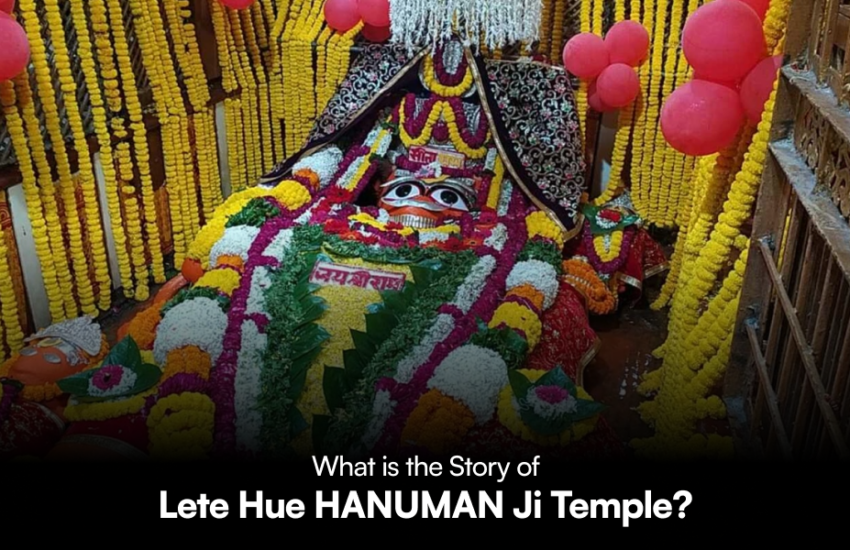
 Prayagraj, the holy city of Uttar Pradesh, has always drawn people for its rivers, its temples, and the grand Kumbh Mela. Among the most revered shrines in the city, lete hue Hanuman Ji temple (Bade Hanuman Ji Mandir) remains the center of devotion for Hindus for ages. It is actually the one and only temple in the world where Lord Hanuman Ji is in the resting position.
According to popular belief, the idol of Lete Hue Hanuman Ji is swayambhu (self-manifested) and is closely connected to the sacred confluence of the Ganga, Yamuna, and Saraswati rivers.
As remarkable as this Hanuman Ji form is, the story behind the temple is equally mesmerising, filled with devotion and timeless legend. So, let’s today uncover the real story behind lete hue hanuman ji mandir in Prayagraj.
The Story Behind Lete Hue Hanuman Ji
In the Hindu tradition, Hanumanji is known as the greatest devotee of Lord Ram. He is worshipped for his strength, courage, devotion, and wisdom. We all picture him flying across mountains, lifting the Sanjeevani hill. But there is another side, quieter yet powerful, that is the resting form, or Lete Hue Hanuman murti.
After Lord Rama defeated Ravana and returned, Hanumanji, exhausted from his endless tasks, was instructed by Mata Sita to rest. He lay down on the banks of the Sangam. The Bade Hanuman Mandir is believed to be around 600-700 years old. It was built after a merchant from Kannauj had a dream to commission a large stone idol of Hanuman to fulfill his wish for a son.
In some stories, after the war in Lanka, Hanuman ji had been moving constantly, serving sages, helping devotees, attending to all matters. At some point, sages requested him to stay still, to bless people quietly. He rested in a reclining posture, listening to chants, absorbing devotion from those nearby.
The Hanuman ji murti for home in this form particularly brings the same calm. Families place it in living rooms, prayer corners, or study areas. Children look at him and feel a quiet reassurance. Elders find comfort in his presence. He is still the protector, devoted to Ram, yet gentler, softer, more approachable.
For devotees who keep the marble Hanuman murti at home, it is believed to bring relief from stress, fear, and anxiety. Children and elders alike are drawn to this form because it feels approachable. Hanuman ji is still the protector and devotee of Ram, yet in this form, he appears softer, inviting, and restful.
Cultural and Regional Importance of Lete Hue Hanuman Ji Temple
The Lete Hue Hanuman Ji Temple holds a quiet but deep place in the hearts of local devotees. Unlike many temples where Hanuman ji is depicted in a dynamic or fighting posture, this temple is known for the resting Hanuman moorti. People who visit often speak of the peace they experience upon seeing him in this posture.
The cultural importance of this temple is tied closely to the teachings of the Ramayana. After helping Lord Ram defeat Ravana and completing his many missions, Hanuman ji took moments to rest. The resting Hanuman murti reflects a side of devotion that is quiet, reflective, and full of wisdom. It quietly shows that strength is not only in deeds but also in calmness and steadiness.
Locally, the temple has significance because it keeps traditions alive. The Lord Hanuman statue in the temple is the temple are offered flowers, garlands, and vermillion.
Significance of Hanuman Ji’s Resting Form
The resting form of Hanuman ji holds a special place in Hindu devotion. The Hanuman Ji idol in this posture carries calmness and energy together, devotion without display.
Symbolism of the Resting Hanuman
The reclining form shows a balance between movement and stillness. After performing great feats, Hanuman ji rested to regain strength and reflect on devotion to Lord Ram. The Lete Hue Hanuman murti teaches that true strength comes not just from action but from clarity, patience, and reflection. Devotees see it and learn discipline, focus, and the value of quiet observation.
Spiritual Lessons
The resting Hanuman ji is considered very auspicious. Seeing the idol at home or temple reminds devotees to control the mind, focus, and nurture devotion. Protection is present even in stillness. Worshipping this form shows that devotion is alive, practiced with care, and strengthened by moments of rest.
Role in Daily Life and Worship
Having a Hanuman Ji idol in the resting posture at home brings calmness and guidance. Families place it in prayer rooms, living areas, or near study spaces. Children watch, elders pray, and the presence of the marble teaches stillness, attention, and reflection.
Conclusion
The resting form of Hanuman ji holds a unique place in devotion, representing calm strength and protective energy. Worshipping the Hanuman Ji idol in this posture encourages reflection, inner balance, and spiritual focus. Its presence in homes or temples serves as a quiet reminder of patience, discipline, and the harmony between action and stillness.
For those seeking an authentic representation of Hanuman ji, Pandey Moorti Bhandar offers meticulously crafted idols that preserve traditional artistry and spiritual significance. They are one of the oldest marble moorti manufacturers in Jaipur, creating and crafting sacred idols for three generations.
FAQs
Are Lete Hanuman and Bade Hanuman the Same?
Lete Hanuman refers to the reclining, resting posture. Bade Hanuman generally refers to a large or prominent idol. In Prayagraj, the terms are often spoken together, but the focus is on the reclining form.
What are the 5 Forms of Hanuman?
The five forms, known as Panchmukhi Hanuman, include Hanuman with faces of Hanuman, Narasimha, Garuda, Varaha, and Hayagriva. Each face in the Panchmukhi Hanuman murti carries different powers and devotion aspects. Together, they show vigilance, strength, and spiritual wisdom.
How Far is Lete Hanuman ji Prayagraj from Triveni Sangam?
The Lete Hanuman Ji Temple is located near the Triveni Sangam in Prayagraj, approximately one to two kilometers away. It is easily accessible on foot or by local transport from the confluence of the Ganga, Yamuna, and Saraswati rivers.
What is the Significance of the Bade Hanuman Statue?
The Bade Hanuman statue reflects the immense strength and the importance of rest. Devotees believe it guides homes and neighborhoods, inspires courage, and serves as a focal point for prayers.