
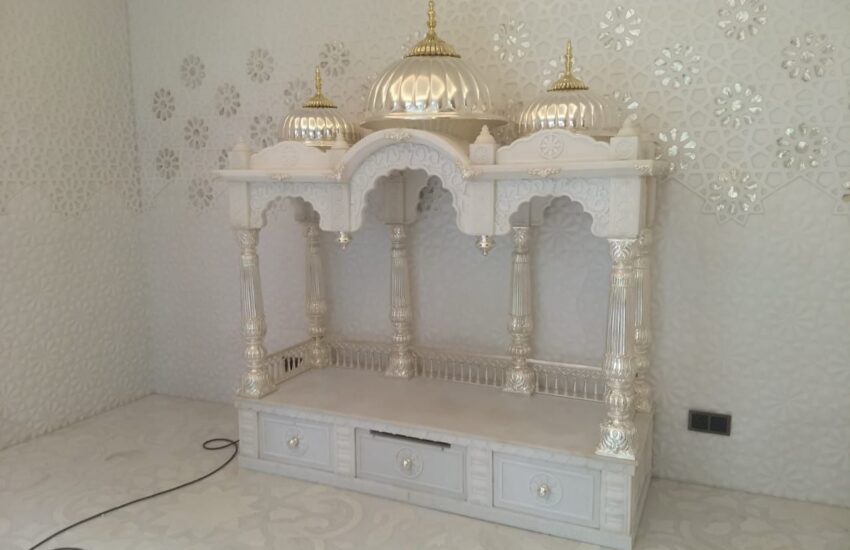
 Posted by
 Gone are the days when wooden home mandirs dominated Indian households. As homes become more modern and luxurious, people now prefer sleek, modular mandir designs, and marble home temples fit this aesthetic beautifully.
White marble temples, in particular, pair perfectly with marble idols, creating a harmonious and elegant sacred space. The best part is that marble mandirs are highly customizable, from size and colour to carvings and materials; everything can be tailored to your needs.

But with so many options, how do you know which marble home mandir will best complement your pooja room? If you’re unsure, let us present to you the list of 2026’s most trending and in-demand marble home temple designs, along with what makes them stand out from traditional mandirs.
2026’s List of Top Marble Home Temple Designs
In many Indian homes, sacred spaces have slowly shifted from heavy wooden structures to graceful and long-lasting stone creations. The preference for a marble temple for home has grown stronger because marble brings purity, stability, and a calm presence.
So, here are some marble home temple design ideas:
1. Traditional Rajasthani Marble Temple
The Traditional Rajasthani marble mandir brings the feeling of an old palace into a home. Pillars carved with floral motifs, miniature domes, and lotus patterns create a sense of royalty.
The raised platform for the idol ensures that offerings and lamps remain well-placed and secure. Families prefer this design because it feels anchored in cultural heritage, carrying the echoes of grand rituals from centuries past.
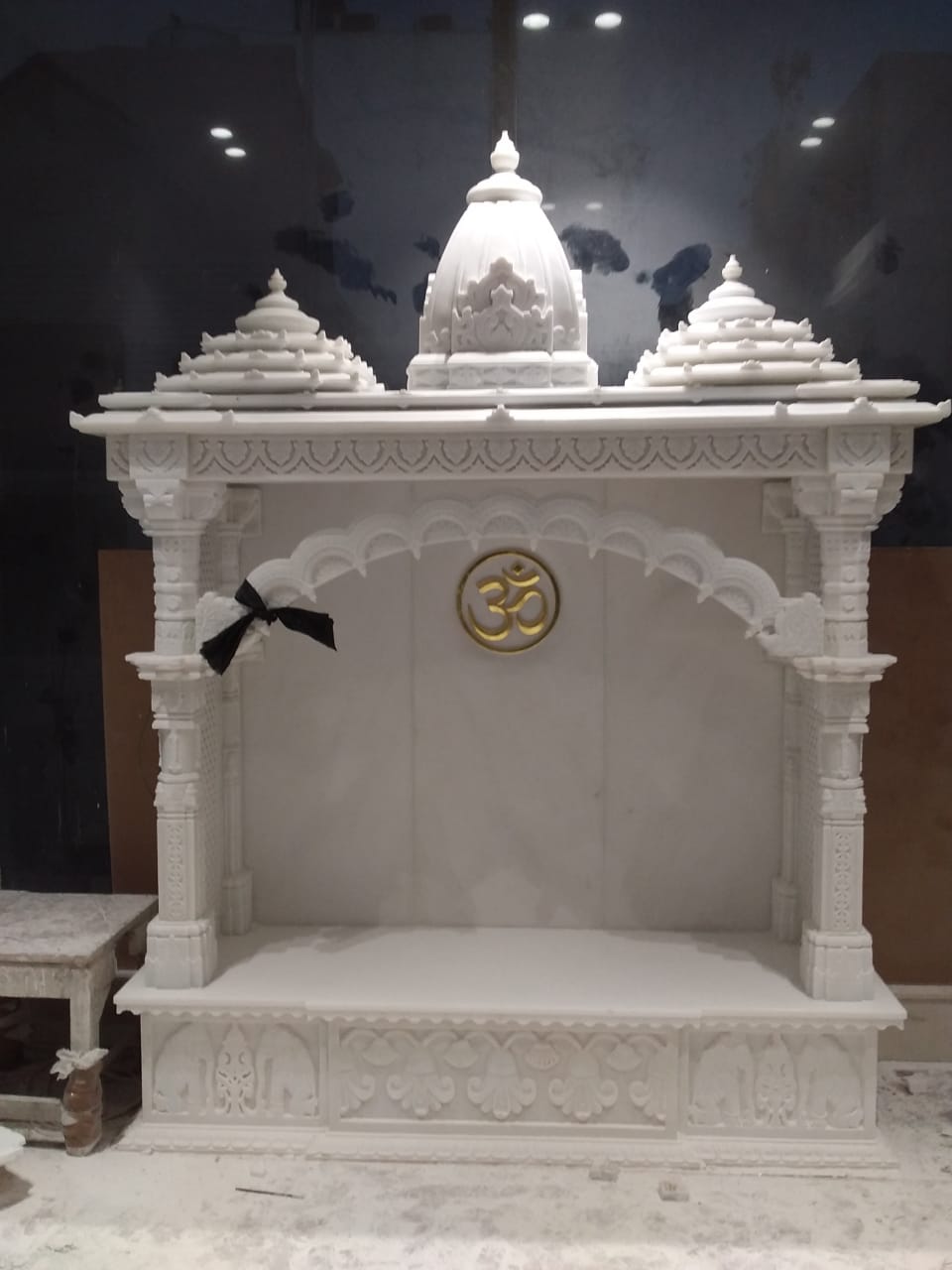
Even in a modern living room, a temple like this becomes a striking focal point while maintaining the quiet dignity of devotion. The use of thick marble allows deep carvings that will endure for generations, making it a true heirloom.
2. Modern Minimal Marble Mandir
The Modern Minimal marble temple for home emphasises simplicity and calm. Straight, smooth lines and open shelves create a space that does not overwhelm the senses. The idol rests on a clean platform, and subtle recesses hold incense, lamps, and small prayer items.
It blends seamlessly with contemporary interiors, offering a peaceful corner without drawing attention away from the room’s overall décor. Minimalism here does not mean lack of devotion; it allows focus on rituals with clarity and ease.
3. Wall-Mounted Marble Temple
Wall-mounted temples are ideal for spaces where every square foot matters. These mandirs are fixed to the wall, and a compact ledge supports the idol and offerings. Even in tight apartments, the sacred corner can feel spacious because the structure occupies no floor area.
Decorative carvings along the edges add personality without taking space, and the marble surface ensures the temple retains its pristine look for years. Families with smaller homes often choose this design to create a small marble mandir that is both practical and beautiful.
4. Marble Temple with Golden Inlay
The marble temple with golden inlay adds a soft glow to the prayer space. Thin strips of gold-tone metal embedded into borders and arches catch the light from lamps and diyas, giving the area a festive feel even during everyday rituals.
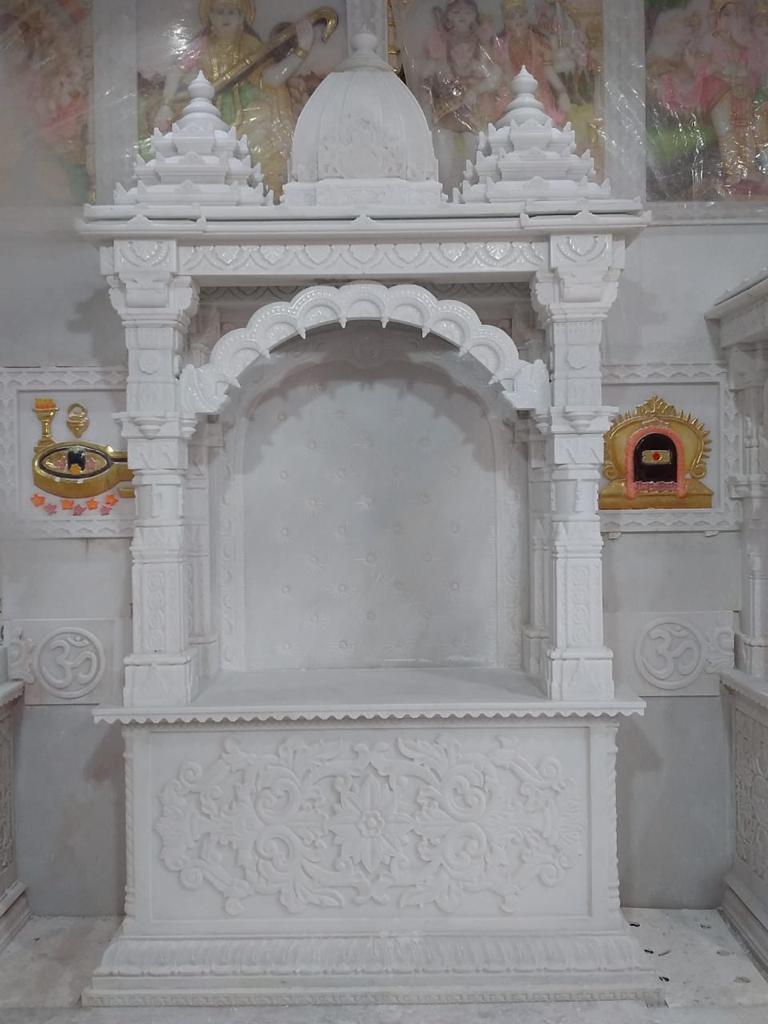
Such marble pooja mandir designs are appreciated in homes that host regular gatherings, as the golden accents enhance the feeling of celebration while remaining elegant. The combination of white marble and metallic warmth creates a sacred ambience that feels timeless and refined.
5. Marble Mandir with Storage
A temple with integrated storage has become one of the most practical choices in 2026. Drawers beneath the platform store incense, wicks, and small utensils, while side cabinets keep prayer books and brass items neat.
The design allows devotion to remain central while keeping the area uncluttered. Families following daily rituals benefit from this arrangement because everything is accessible but hidden, maintaining the temple’s aesthetic serenity. The storage features are usually carved seamlessly into the marble so that they do not disturb the harmony of the design.
6. South-Indian Style Marble Temple
The South-Indian style brings the miniature charm of temple towns into the home. Its short pillars, stepped bases, and compact tower-like tops reflect classical proportions, familiar from centuries-old shrines.
Carvings often depict simple geometric forms or floral motifs, offering a subtle elegance. Families drawn to South-Indian rituals appreciate the layout for arranging lamps, flowers, and offerings according to tradition. Though smaller than large temples, these sangmarmar temple structures are strong and steady, embodying devotion with architectural clarity.
7. Gujarati Haveli-Style Marble Mandir
The Gujarati haveli-style temple draws from the grandeur of old havelis, with carved brackets, layered cornices, and projecting platforms. Balconies or miniature projections around the idol create space for lamps and offerings.
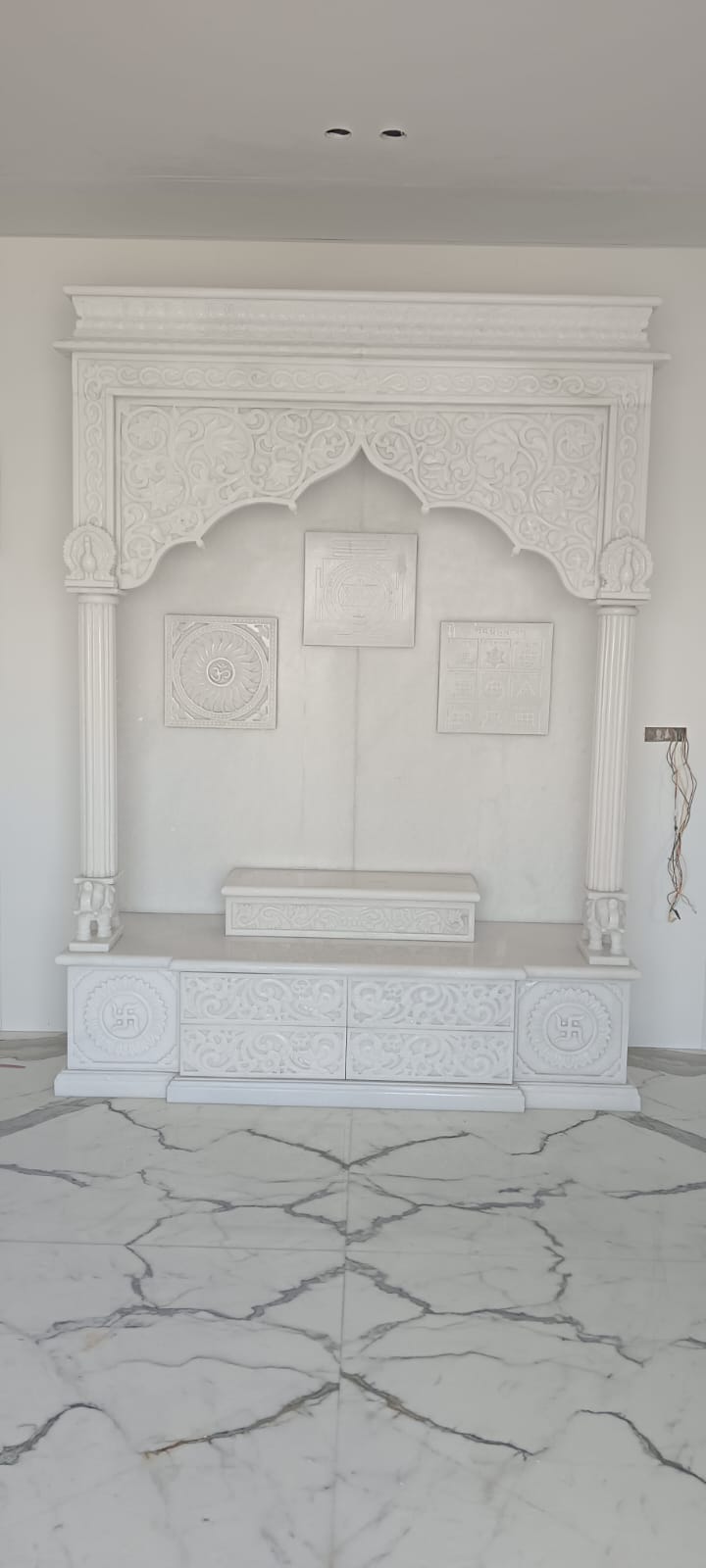
Its ornamental style makes the temple a natural gathering point for family aartis and festive prayers. Even with its detailed carvings, this marble mandir design remains functional, allowing daily worship while preserving the charm of traditional craftsmanship.
8. Marble Temple with Decorative Back-Wall Panel
A marble home temple with a decorative back-wall panel turns the wall behind the deity into a focal art piece. Panels may be carved, painted, or etched with sacred symbols. Carvings may include Om symbols, vines, or geometric patterns, creating a visual focus behind the deity.
Panels made from Marble home temple white stone brighten the idol space, drawing attention softly to the divine presence. Such a marble mandir design for home combines artistic expression with devotion, giving families a backdrop that enhances rituals without overwhelming the room.
9. Marble Temple with LED Backlit Accents
LED backlighting brings a modern touch to a sacred space. Soft light glowing from behind the idol or along panels highlights marble textures and carvings.
Evening prayers become more divine as the subtle illumination accentuates the sanctity of the area. Families value the combination of craftsmanship and technology, creating an atmosphere that is both contemporary and respectful of tradition.
10. Carved Marble Temple with Jali Patterns
Jali patterns bring intricate beauty and natural ventilation for incense smoke. Latticework on doors, side panels, or arches casts gentle shadows that shift with the day.
These carved structures allow air to circulate while adding a timeless visual charm. Such temples are admired for their delicate detailing and enduring appeal. Even small shrines appear light, textured, and elegant because of carefully carved patterns.
Why Choose Marble Mandir Over Wooden Ones?
In Indian homes, the choice of a marble mandir for sacred space carries both spiritual and practical significance. Marble holds a natural coolness and calm that enhances the atmosphere of devotion. Unlike wooden structures, marble does not attract termites or pests and does not warp or crack with changes in temperature or humidity. Over the years, the shine and strength of marble remain intact, making it a long-lasting option for families who wish to pass the temple down through generations.
The purity of white marble connects with rituals described in Hindu scriptures. Daily worship, the lighting of lamps, and offerings of flowers or water are carried out on a surface that is naturally clean and easy to maintain. A marble temple for home remains bright and does not absorb stains from oils, incense, or turmeric, unlike wood, which may discolour or require frequent polishing.
Marble also allows fine carvings that bring sacred symbols, deities, and decorative motifs to life. Even small temples can carry detailed artistry that would be difficult to achieve with wood. Sculptors can create intricate jali patterns, lotus motifs, or miniature shikharas, adding both aesthetic beauty and spiritual depth.
Conclusion
Marble home temples combine devotion, durability, and beauty in a way that wooden mandirs cannot match. They remain bright, cool, and stable over the years, providing a sacred space that supports daily worship and rituals.
Fine carvings, intricate jali patterns, and elegant designs allow even a small marble mandir to become a meaningful centre of devotion.
For those seeking customised and modular marble mandirs, Pandey Moorti Bhandar offers expertly crafted home temples that can be tailored in size, design, and detailing. Their work allows each home to have a sacred corner that is timeless, durable, and perfectly suited to family rituals.
FAQs
How Long Does a Marble Mandir Last?
A marble mandir can last for several decades, even generations, when crafted from quality marble. Its durability resists cracks, warping, and pests, making it a long-term choice for homes and preserving its beauty over time.
Which Marble is Best for Temples?
White makrana marble is preferred for temples due to its purity, smooth surface, and strength. Sangmarmar marble is highly recommended, as it allows detailed carvings, reflects light softly, and remains durable for daily worship.
What is the Ideal Size for a Home Mandir?
The ideal home mandir size depends on space availability and ritual needs. Compact mandirs fit small rooms, while larger spaces can accommodate multi-tiered temples. The balance between room space and ease of worship is most important.
Is Marble Good for a Pooja Room?
Marble is highly suitable for pooja rooms. It is easy to clean, remains bright, resists stains from oil or incense, and adds a sense of calm and purity, creating an ideal environment for daily worship.