
 Posted by
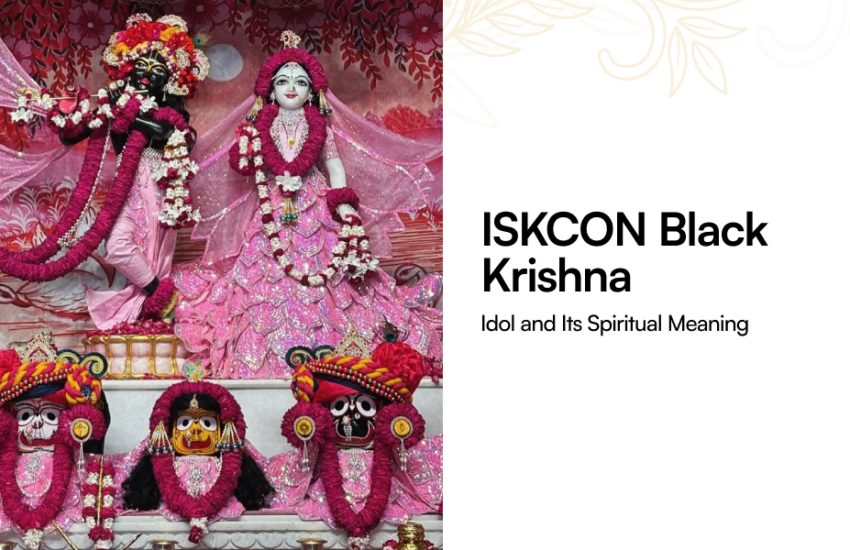
 Anyone who has spent time inside an ISKCON temple often notices a different kind of peace and calm that is hard to find in any other location. Among the idols placed in these temples, the ISKCON Black Krishna idol draws attention in a quiet way. It does not rely on brightness or ornamentation. The depth of the black stone and the composed gaze are enough to mesmerize anyone.
In many Indian homes, white marble Krishna idols are more commonly seen. They reflect light easily and suit smaller prayer spaces. Still, many devotees feel naturally inclined toward a black Krishna idol. Although there are many similarities, the ISKCON Krishna idol has its own importance, significance, and value, and should be understood before it is placed in the home temple.
Let’s take a look at the ISKCON Black Krishna Idol, its significance, spiritual meaning, and the potential to create a stronger, deeper relationship with Krishna in your home temple.
Why is Krishna Depicted in Black Form?
Krishna has been represented in many forms across regions and centuries. Krishna’s black color has a deep spiritual and symbolic value in Hinduism. The Puranas describe Krishna’s complexion as similar to rain clouds. Krishna’s dark complexion is symbolic of the infinite (beyond measure) and the unknowable qualities of the divine. Further, Krishna’s complexion is a reminder to men and women of God’s immense power.
Stories from Krishna’s childhood often mention the beauty of his dark complexion and the affection it inspired, attracting the love and devotion of his parents, friends, and the Gopis of Vrindavan. The ISKCON black Krishna idol in temples helps devotees focus on his divine qualities rather than outward appearances. It is believed that the color also signifies Krishna’s role as the ultimate protector who takes away the darkness of ignorance from the world.
The black form of Kanhaiya is often paired with Radha in ISKCON Radha Krishna idols, showing the eternal love and devotion between the divine couple. While Radha represents devotion, Krishna’s dark form symbolizes the depth of divine mystery that cannot be fully understood with the mind.
Thus, the depiction of Krishna in black is not merely artistic. It carries a layered meaning rooted in Puranic stories, devotional practice, and spiritual symbolism. Every detail, from his dark complexion to the expression on the idol’s face, is meant to guide devotees toward love, surrender, and understanding of the divine presence in all aspects of life.
Spiritual Symbolism of the ISKCON Black Krishna Idol
The spiritual meaning of the ISKCON black Krishna idol does not describe itself immediately. The dark surface reduces visual distraction. The mind does not rush to finish reading the form. Attention slows down on its own.
Many devotees notice that time feels different while standing before a black Krishna murti. The form remains unchanged, yet it does not feel static. This quality supports chanting and meditation without effort.
Here are the spiritual symbolisms of the black Krishna murti:
Representation of Infinity and Divine Presence
The black Krishna idol is often associated with the idea of infinity. In practice, this comes through how the form holds space. Just as dark clouds cover the sky without strain, the black form of Krishna carries presence without effort. Devotees often find that their attention settles naturally. The form does not push meaning outward.
Symbolism of the Jugal Jodi
In ISKCON temples, Krishna is commonly worshipped with Radha, forming the jugal jodi. The Radha Krishna murti expresses the eternal bond between the divine and devotion. Krishna’s stance remains composed. Radha’s form carries gentleness and movement. The space between them matters. The Radha Krishna murti expresses devotion and divine presence as one continuous relationship.
Expression of Compassion and Guidance
Every feature of the black Krishna idol is shaped with restraint. Dark stone amplifies sharpness. For this reason, expressions are suggested rather than defined. The gaze is calm and slightly lowered. The posture avoids excess movement. These choices prevent restlessness from entering the form. Over time, this restraint allows devotees to remain with the idol for longer periods without visual fatigue.
Reminder of Krishna’s Pastimes
The ISKCON black Krishna idol also reflects Krishna’s life and leelas in Vrindavan. Stories of his childhood, his playful interactions, and his divine teachings are embedded in the sculpted form. The dark complexion reminds devotees that divinity is not about outward beauty but about the purity of purpose, love, and devotion.
Eternal Union of Devotion and Divinity
The jugal jodi of Radha and Krishna represents a relationship that does not require explanation. Radha’s devotion finds direction. Krishna’s presence holds it.
Together, the forms express a continuity between devotion and divine response. This understanding develops over time rather than through instruction.
Difference Between White and a Black Krishna Idol
In Hindu tradition, both white and black Krishna idols hold deep spiritual value, but their material, symbolism, and traditional usage show clear differences. These differences are well explained in the Puranas and temple practices that have continued for generations.
White Krishna idols are traditionally made from Makrana marble. This variety of marble is known for its purity, softness, and long-lasting shine. Because of its white color, it is associated with peace, purity, and sattva guna. They are commonly placed in homes where daily rituals are quiet and close. The white form of Krishna reflects serenity and balance, making it suitable for spaces meant for quiet devotion and meditation.
A Krishna idol black stone, often carved from Baislana marble, suits temple environments. The stone absorbs signs of worship such as oil, incense, and touch without appearing worn. Black Krishna idols are deeply connected with traditional temple worship, especially in ISKCON and ancient Vaishnav temples. The black color represents depth, infinity, and the hidden nature of the divine.
Conclusion
The ISKCON Black Krishna idol The ISKCON Black Krishna idol does not seek attention. It holds space quietly. Its form, stone, and posture support devotion over long periods without explanation. Its dark form and the choice of stone reflect an understanding of Krishna that goes beyond appearance and enters the world of lived faith. When these aspects are understood clearly, the selection of a Krishna murti becomes a thoughtful and informed decision rather than a decorative one.
In such sacred work, authenticity in stone, proportion, and expression holds great importance. Pandey Moorti Bhandar is the best marble moorti manufacturer based in Jaipur. They have been involved in the creation of Krishna, Radha Krishna, and ISKCON-style murtis using Makrana marble and Baislana stone through time-tested carving practices. Their four generations of experience reflect an understanding of traditional iconography and material discipline, offering devotees and temples murtis that align with scriptural values and established temple traditions rather than modern interpretation.
FAQs
What is the Significance of the ISKCON Black Krishna Idol?
The ISKCON black Krishna idol reflects depth and stillness. Its dark form supports focused worship and long periods of devotion, allowing attention to settle without distraction.
Which Type of Krishna Idol is Good for the Home?
For home worship, a white Krishna idol made from Makrana marble is preferred, as it represents peace, purity, and balance, creating a calm and disciplined devotional environment. However, it all depends on your bhav; you can also keep an ISKCON black Krishna idol at home.
Can We Keep the Krishna Idol at Home Without Radha?
Yes, Krishna can be worshipped alone at home. However, Radha with Krishna reflects complete devotion and spiritual harmony, which many Vaishnav traditions value deeply.
Which Side Should the Krishna Idol Face?
The Krishna idol is traditionally placed facing east or west. East-facing idols supports natural light and maintains balance during daily worship.