
 Posted by
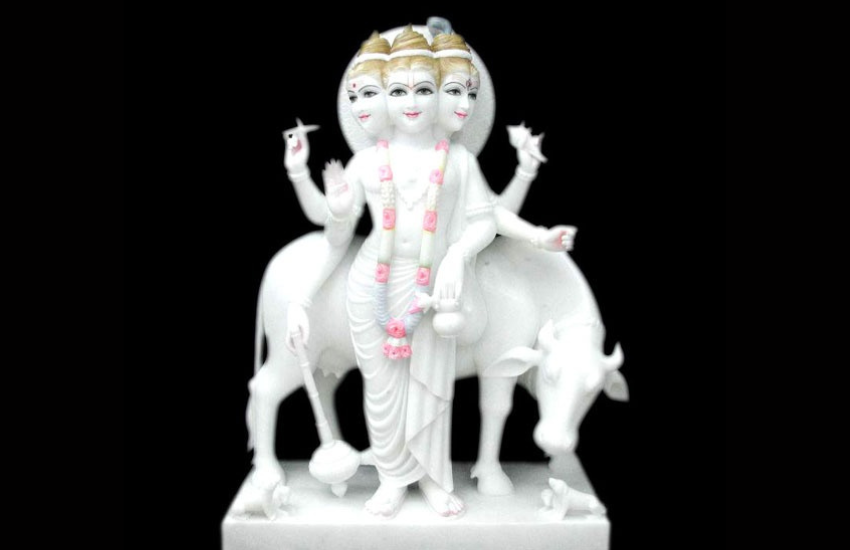
 Lord Dattatreya, also known as Datta Guru, is worshipped as an incarnation of the divine trinity—Lord Brahma, Lord Vishnu, and Lord Shiva. Therefore, Bhagwan Dattatreya murti represents the unity of these universal powers. Also, it represents the balance between creation, preservation, and destruction.
As one of the most revered deities in Hinduism, devotees commonly keep Lord Dattatreya’s idol in Indian households, especially in western regions such as Maharashtra. However, many devotees still remain unaware of the deeper meaning of this form and often question why Lord Dattatreya depicted with three faces.

In this blog, we aim to help you understand the divine origin of Lord Dattatreya Guru, what each of his faces represents, and the spiritual significance of worshipping this form.
The Divine Origin of Lord Dattatreya
Lord Dattatreya is the combined form of the three supreme forces of the universe: Brahma, Vishnu, and Mahesh. According to ancient texts, Sage Atri and his wife Anasuya performed deep penance with complete devotion. However, their prayers were not for power or fame, but for pure knowledge and righteousness.
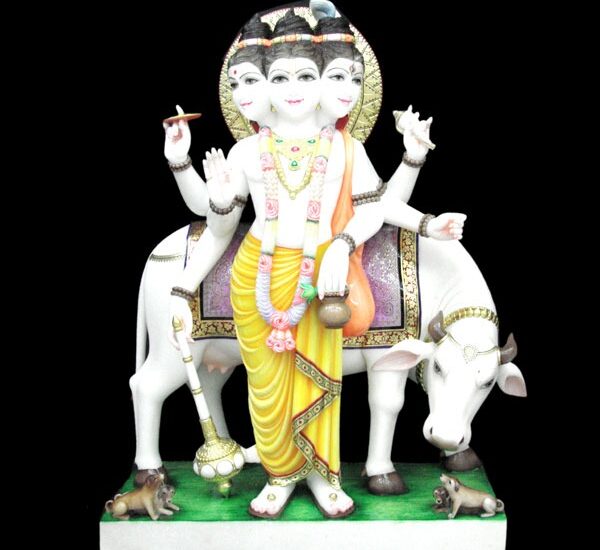
Pleased by their faith, the divine trinity appeared and blessed them with a son who carried their collective energy. That child was Lord Dattatreya. He was born as a teacher who walked the earth freely, guiding seekers toward truth.
Lord Dattatreya lived as an ascetic, observing nature and learning from it. The Puranas tell us that he accepted twenty-four gurus, including the earth, wind, fire, and even simple creatures. As a result, his life teaches that wisdom is present everywhere if one observes with patience and humility. Therefore, devotees see Datta Maharaj murti as a universal guru who belongs to everyone, beyond caste or status.
When artisans sculpt a marble Datta murti, they try to reflect this divine origin through calm expressions and balanced features. A Datta murti marble form, in particular, carries a sense of purity and timelessness, reminding devotees of his eternal presence.
What is the Significance of the Three Faces in Lord Dattatreya Murti?
When someone looks at a Lord Dattatreya murti for the first time, the three faces naturally invite curiosity. As a result, many people ask why Datta Maharaj always shown with three faces and what each face truly means. In our Puranas, nothing is created without purpose, and the form of Lord Dattatreya carries a deep meaning.
Here’s what each face in Lord Dattatreya murti represents:
Lord Brahma
The face of Lord Brahma represents creation. In essence, he stands for the beginning of life, ideas, and knowledge. Brahma gives form to what did not exist before. In the Dattatreya murti, this face teaches that learning and awareness are the foundation of human life.
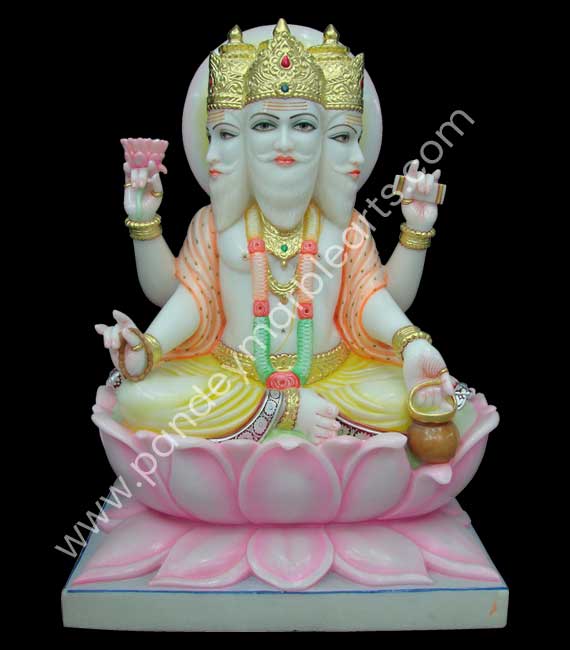
Without knowledge, a person cannot understand duty, truth, or purpose. When devotees pray to this face, they seek clarity of mind and the wisdom to take the right path.
Lord Vishnu
The second face is of Lord Vishnu, who represents preservation. Vishnu protects life and maintains balance in the universe. This face reminds us of responsibility, discipline, and compassion. Once something is created, it must be cared for with patience and faith.
In daily life, this teaching applies to family, work, and spiritual practice. When devotees worship this form in a dattaguru murti, they often pray for stability, protection, and peace. However, Vishnu’s presence in Lord Dattatreya shows that spiritual life is not separate from worldly duties. Both must move together in harmony.
Lord Shiva
The third face is of Lord Shiva, who represents transformation. Many people misunderstand this as destruction alone, but in truth, Shiva clears the old to make way for growth.
This face teaches detachment, inner strength, and acceptance of change. Life brings loss, endings, and challenges, and Shiva’s role reminds us that these moments shape wisdom. In a Gurudev Datta murti, this face carries a peaceful seriousness, showing that transformation comes through awareness, not fear.
Importance of Worshipping Lord Dattatreya Statue
Worshipping Lord Dattatreya is like sitting near a wise elder who guides life without loud words. In the Puranas, Lord Dattatreya is revered as the Adi Guru, the first teacher who taught people how to live with balance and awareness. For centuries, devotees have followed his worship, especially those who seek clarity of thought, stability in life, and strength during difficult times.
Lord Dattatreya Murti teaches that life does not move in a straight line. It moves in cycles, and each phase has its own purpose. Regular worship helps a person accept this truth with calmness.
On the other hand, many families keep a lord dattatreya statue at home because his presence is believed to bring discipline and spiritual direction. His life teaches that knowledge is present everywhere if one observes carefully.
A lord dattatreya marble statue carries special significance because marble has always been linked with purity and permanence. When crafted with devotion, such a statue becomes a lively form of a deity.
How to Worship Lord Dattatreya Moorti?
Worship of Lord Dattatreya is meant to be simple, sincere and full of bhaav (faith). Meanwhile, the Puranas describe him as a guru who accepts devotion offered with a pure heart. Rituals are important, but intention carries greater value.
Below is a traditional and easy way to worship Dattatreya ki murti, followed in many households.
- Place the Lord Dattatreya murti in a clean and quiet space, facing east or north. Clean the pooja mandir daily to maintain purity and discipline.
- Begin the worship in the early morning after personal cleanliness.
- Light a diya using ghee or oil.
- Offer clean water or milk for Abhishek if possible.
- Apply sandalwood paste or kumkum on the forehead of the moorti.
- Offer fresh flowers.
- Light incense sticks and allow the fragrance to spread.
- Offer naivedya such as fruits or simple sweets.
- Chant the Datta mantra slowly. “Om Shri Dattatreya Namah” or “Digambara Digambara Shripad Vallabha Digambara” are traditionally recited.
- Sit quietly for a few minutes after chanting.
- Read or remember a small story of Lord Dattatreya from the Puranas.
- Conclude the worship by bowing with gratitude and seeking guidance for right conduct in daily life.
Conclusion
The form of Lord Dattatreya murti reminds us that true guidance comes from balance, patience, and awareness. His three faces quietly teach how life moves through learning, responsibility, and acceptance of change. When this understanding enters daily worship, devotion becomes meaningful and steady, not hurried or ritual-bound.
For devotees who wish to bring this sacred presence into their homes or temples, the quality and intent behind the murti matter deeply. At Pandey Moorti Bhandar, we offer Lord Dattatreya murti in high-quality white makrana marble. We craft each moorti with respect for the Puranic tradition and years of sculpting knowledge passed through generations.
FAQs
How to Pray to Lord Dattatreya?
Prayer to Lord Dattatreya should be simple and sincere. Begin with cleanliness, light a diya, offer water or flowers, and chant the Datta mantra with focus. Sit quietly after prayer and seek guidance for right thinking and disciplined living.
Who is the Wife of Dattatreya?
Anagha Lakshmi, also known as Vidya Lakshmi or Anagha Devi, is worshipped as the wife of Lord Dattatreya. She embodies his Shakti, the divine feminine energy. Devotees regard Anagha Lakshmi as the unified form of Saraswati, Lakshmi, and Parvati. They worship her together with Lord Dattatreya in the revered Anagha Dattatreya form.
Can We Keep Dattatreya Idols at Home?
Yes, you can keep Lord Dattatreya idols at home. Devotees believe that his presence brings clarity, discipline, and spiritual guidance. Hence, you should place the murti in a clean and sacred space and worship it with respect and regularity by following simple daily practices.
How to Impress Lord Dattatreya?
Lord Dattatreya values purity of intention more than elaborate rituals. He blesses those who live honestly, respect elders and teachers, maintain discipline, and chant his name with faith, as these are considered the most meaningful ways to seek his grace.
What are the Benefits of Worshipping Lord Dattatreya?
Worshipping Lord Dattatreya helps develop mental clarity, patience, and inner balance. Devotees believe it removes confusion, strengthens decision-making, and encourages spiritual growth. Regular worship also builds humility and acceptance, guiding one toward a disciplined and meaningful life.