
 Posted by
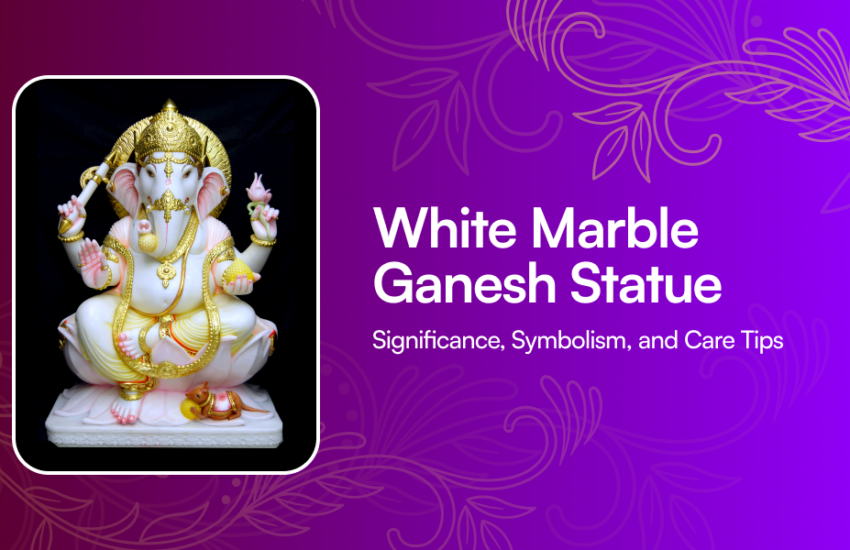
 Lord Ganesha is widely revered as Pratham Pujya Devta (the first deity to be worshipped) in Hinduism. He is duly worshipped as the remover of obstacles (Vighnaharta) and as the lord of new beginnings. With that belief in mind, people keep a white marble Ganesh statue in their homes and temples.
Over time, especially in the present generation, many have begun to forget these roots, treating idols merely as showpieces.This approach overlooks a long-held belief that murtis carry living energy, or pran. For this reason, people handle, place, and maintain them with care and deep respect.
In this guide, we explain what a marble Ganesh idol represents, the meaning behind each posture of the Ganesha statue, and the right way to care for these murtis in everyday household settings.
When people understand these aspects and act on them, the idol blesses them with a meaningful presence and quietly brings balance and calm into everyday life.

What Does a White Marble Ganesh Statue Symbolize?
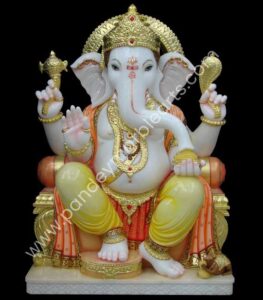
A white marble Ganesh statue is associated with beginnings, steadiness, and mental clarity. Families often place a marble Ganesha idol for home worship to establish a sense of order and focus within daily routines. Offices and workspaces keep Ganesh idols with the belief that mindful actions help reduce obstacles. The symbolism of a white Ganesh murti goes beyond faith alone. The material itself shapes how people perceive and experience the idol over time.
Purity and Spiritual Clarity
White marble has always been associated with a calm presence. Makrana marble, in particular, carries a fine grain that reflects light softly rather than sharply. This quality creates a sense of quiet around the idol, especially during prayer.
The white surface does not distract the eye. Attention naturally settles on the form rather than surface decoration. Over the years of placement, white marble develops a gentle softness rather than losing clarity.
Knowledge and Wisdom
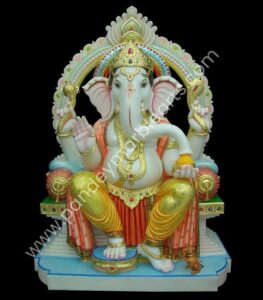
Lord Ganesha represents wisdom and intellect, and the form conveys these qualities without explanation. The elephant head carries weight without feeling heavy. The broad forehead allows clear expression. Artisans carve the large ears open and balanced to suggest attentiveness.
Every feature of a Lord Ganesha marble statue follows careful proportion. When artisans get these proportions right, the idol holds a strong presence even without elaborate decoration. White marble supports this clarity because it does not hide imperfections. Every line remains visible, encouraging careful workmanship.
Peace and Harmony in the Home
A white Makrana marble Ganesh statue often becomes a quiet anchor within a household. Homes that keep a ganesh ji marble murti in a fixed and respected place tend to develop habits around that space. Cleaning is done more carefully.
Traditional placement often follows north or east-facing directions. These choices were not rigid rules but practices refined through observation. Over time, such placements showed consistency in maintaining calm and focus within living spaces.
Protection and Prosperity
Ganesh idols are also associated with protection, though this protection is understood through permanence rather than symbolism. A marble Ganesh idol that remains in one place for years begins to feel connected to the space itself.
White marble reflects light gently and does not overpower the surroundings. Even larger forms, such as a 5-foot Ganesh murti, maintain balance when artisans handle proportion and placement correctly.
Spiritual Significance of Marble Ganesha Idol for Home
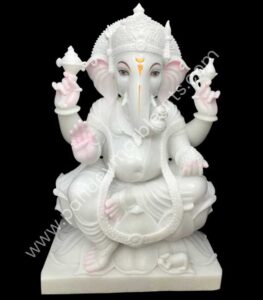
Placing a marble Ganesha idol for home worship is considered more than decoration. Every posture, hand gesture, and carved detail carries meaning developed through tradition.
The elephant head represents discernment and strength. Large ears suggest listening before action. The trunk reflects adaptability, capable of both strength and delicacy. These meanings are conveyed visually rather than verbally.
Daily worship, even if brief, reinforces discipline. The presence of the idol encourages regularity rather than intensity. This consistency supports balance within household routines.
Homes often place a white Ganesh murti in a clean, respected area rather than central display spaces. Northeast-facing placement is commonly followed to maintain focus and calm.
Why White Marble is Traditionally Preferred for Ganesh Idols?
White marble has remained the preferred material for Ganesh idols for centuries due to both spiritual and practical reasons. Makrana marble responds well to hand tools. Chisel marks settle cleanly when struck with patience. Grain direction guides carving decisions.
A ganesh ji marble murti carved from white Makrana marble reflects light softly, creating an atmosphere suited for prayer. The stone does not glare or dominate the space.
Marble is also durable. It does not corrode, decay, or absorb impurities easily. When maintained correctly, a 2 feet ganesh statue or a larger 5 feet ganesh murti can remain intact for generations.
The cool surface of marble provides a calming tactile experience during worship. This subtle quality supports longer periods of attention without fatigue.
Different Postures of the Lord Ganesha Marble Statue
The posture of a lord ganesha marble statue carries specific meaning. Traditional sculptors followed descriptions found in Shilpa Shastra and Puranic texts, where each form reflects a distinct state of energy.
Seated Ganesha Marble Murti (Lalitasana)
The seated posture is most commonly placed in homes. One leg remains folded while the other rests downward. This posture reflects stability and thoughtful action.
A seated marble Ganesh idol suits daily worship. The form feels settled and grounded, encouraging calm decision-making within household life. People prefer this posture for long-term placement, as it does not convey movement or urgency.
Standing Ganesha Marble Statue (Sthanaka Ganesha)
The standing posture reflects alertness and protection. Temples and larger spaces often place a 5 feet ganesh murti in standing form to establish presence.
This posture suggests readiness rather than aggression. When proportions are correct, the form appears watchful without appearing forceful. People often place standing Ganesh idols near entrances or open halls where guardianship feels symbolically appropriate.
Dancing Ganesha Marble Murti (Nritya Ganesha)
The dancing form reflects movement held within discipline. Sculpting this posture requires careful balance, as every curve contributes to stability.
A dancing ganesh ji marble murti represents joy expressed through control. People often choose this form for cultural spaces, learning environments, or areas associated with creativity.
Reclining Ganesha Marble Statue
The reclining posture reflects comfort and trust. People place this form less often in homes and usually choose it for private or contemplative spaces. The posture suggests acceptance rather than instruction, making it suitable for quiet environments.
How to Care for a White Marble Ganesh Statue?
Caring for a white Makrana marble Ganesh statue is also an expression of devotion. Moreover, when you treat it with patience and maintain cleanliness, the marble retains its purity. As a result, the idol continues to radiate wisdom and positive energy within the home for many years.
Here’s how to maintain the marble moortis of Ganesh Ji:
Keep the Idol Clean and Dust-Free
Use Plain Water for Periodic Cleaning
For deeper cleaning, plain water applied gently with a cotton cloth is sufficient. Avoid scrubbing, as it flattens fine carvings and damages the polish. Some people gently use mild fabric softener diluted in water, but they take care to avoid any excess.
Avoid Chemical Cleaners and Harsh Substances
Do not use chemical cleaners, acids, or soaps. These substances react with marble and cause dull patches or yellowing that cannot be reversed.
Keep Away from Direct Sunlight and Moisture
Direct sunlight affects colour gradually. Excess moisture weakens the stone over time. Placement in a shaded, ventilated area supports long-term preservation.
Offer Natural Items During Worship
Remove offerings such as flowers, sandalwood paste, or water after worship. Stains develop slowly, but once absorbed, removal becomes difficult.
Conclusion
A white marble Ganesh statue carries meaning beyond form alone. Material, posture, placement, and care work together to shape how the murti connects with the home and the people who worship it. Such understanding preserves tradition in its true sense, not merely as a ritual, but as a lived practice.
For families seeking marble murtis carved with devotion and scriptural understanding, Pandey Moorti Bhandar continues a legacy of three generations in marble craftsmanship. Their experience in shaping sacred forms reflects patience and respect for tradition, making their work trusted across India and the world for authentic marble moortis.
FAQs
What Does the Ganesh Idol Represent?
The Ganesh idol reflects wisdom, steadiness, obstacle removal, and disciplined beginnings within daily life.
Which Ganesha Idol is Good for the Home?
People traditionally prefer a calm, seated Ganesh idol carved in white marble for homes, as it supports balance and a settled presence.
Which Side should Ganesha Face?
Ganesha should ideally face north or east. People commonly follow north- or east-facing placement to maintain focus and stability during worship.
Should the Ganesh Idol be Gifted?
People consider gifting a Ganesh idol auspicious when they do so with respect, as it symbolises goodwill and support during new beginnings.
Should Ganesha be Sitting or Standing?
A sitting Ganesha idol suits homes due to their settled nature. Standing forms suit temples, entrances, or larger spaces better.