
 Posted by
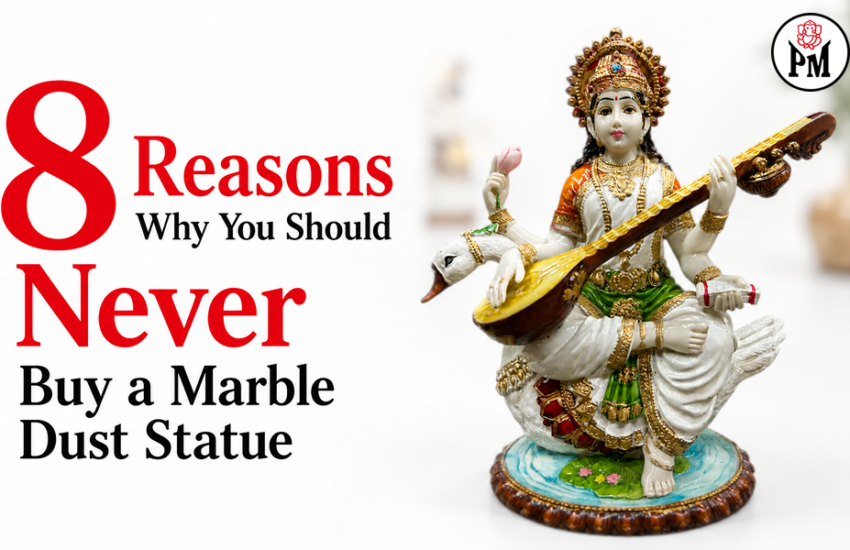
 The marble moorti market in India has evolved a lot over time, transforming from family-run businesses to workshops and factory-led productions. Even with this shift, the industry has continued to uphold its long-standing preference for using high-quality marble to create sacred idols of Hindu gods and goddesses. However, in the last few years, there has been a growing hype around marble dust statue products, with many sellers even promoting them as an alternative to pure marble statues.
But are marble dust murtis really as auspicious as natural marble idols? Are they suitable for worship? Well, if you want a single, straight answer, then it’s NO. For decor use, people may choose a material according to their preference. But in worship, the material selection for an idol has always been treated with greater care and respect. Temple traditions, old practices, and traditional moorti-making techniques usually give more importance to the material itself.
Understanding the difference between a natural marble murti and one made from processed or composite materials becomes even more important before inviting a deity into a home or temple.
What is a Marble Dust Statue & How is It Different from a Marble Statue?
A marble dust statue is generally made from a composite material, which is a mix of fine marble powder and binding agents, such as resin and fiber. The mixture is poured into prepared moulds and is left to harden into shape. Later, they are polished to look smooth and bright, which often creates the impression of natural stone.
Meanwhile, a traditional natural marble murti follows a completely different process of creation. It starts with selecting the high-quality marble block and shaping it through carving. Every part of the idol is formed by removing and refining the stone, primarily through hand craftsmanship, rather than being cast in a mould. After carving, it goes through fine detailing, polishing and traditional colouring and ornamentation (where required). The
A traditional marble murti follows a different process. It begins with selecting a complete stone block and then shaping it through carving. Every portion of the idol is created by removing stone gradually rather than filling a mould. The entire murti remains made from a single piece of material on the inside and outside.
According to the Shilpa Shastra, the choice of material for idol making must be highly intentional, with potential for carrying cosmic and spiritual energies. Stone (shila) idols are highly revered for temples and homes, as they are made from naturally sourced stone, are durable and believed to hold living energies (pran). While white marble symbolizes the purity (sattva guna), black marble idols are often chosen for deities of power and protection.
As marble dust idols are made from processed material, they don’t hold any cosmic or spiritual characteristics, which makes them inauspicious for worship.
Why are Marble Dust Moortis Considered Inauspicious for Worship?
The auspiciousness and inauspiciousness around the marble dust murti doesn’t come from any superstition or fear, but from the traditional understanding of how sacred idols should be made and preserved.
The main question around marble dust idols is that they are manufactured through a process that changes the original stone into a mixed material. Many traditional sculptors and even families believe that once the natural form of the stone is broken down and combined with synthetic substances, they no longer hold suitability for worship. Many temple institutions have condemned the use of marble dust statues for worship.
Here are many more reasons why you should never buy a marble dust murti:
1. Lack of Natural Stone Purity
Natural marble idols are valued because they are made from a single stone block. There is no layered composition, no inside filling and no binding chemicals inside the structure.
On the contrary, marble dust statues are made from powdered marble and synthetic binding chemicals. Therefore, there is nothing like sacredness or purity, as they are not even natural.
2. Traditional Preference for Solid Marble
Across many temples across different Indian regions, marble remains the widely accepted material for deity idols. This preference isn’t based on the appearance, but on durability, spiritual significance and longevity.
Meanwhile, marble dust idols are relatively new and have entered the industry through commercial manufacturing systems, primarily controlled by China. Because of that, many worship traditions simply did not adopt them as primary materials for sacred idols.
3. Questions around Sacred Energy Retention
Among many traditional beliefs, a murti is not treated as a sculpture but as the deity itself. Before an idol is placed in a temple, a sacred consecration ritual known as Pran Pratishtha is traditionally performed to invite divine presence into the murti. Marble is believed to retain the sacred living energy within the idol over time.
Because of this, there is a huge concern regarding whether manufactured composite materials hold the same spiritual suitability as natural materials.
4. No Acceptance in Traditional Worship
Many ancient Hindu texts, especially the Shilpa Shastra, describe important considerations for idol making, including the form, dimensions, posture, and suitable materials. It places importance on using pure, natural, and uncompromised materials for sacred idols intended for worship.
While practices may differ from region to region, mould-made marble dust idols are generally prohibited for worship. As they are artificial and highly adulterated materials, they have not received the same level of acceptance as traditional stone idols in many worship practices.
5. No Association with Ancient Practices
Marble has been associated with ancient temple traditions for centuries. Moortikars select the marble blocks carefully and work according to measurements and proportions connected with deity forms. The process itself is treated with seriousness because the murti represents the divine presence.
At the same time, marble dust moorti-making belongs to a much newer manufacturing method. Since there is no long historical association between marble dust and traditional worship, families often prefer choosing natural options.
6. Viewed More as Decorative Than Sacred
Many marble dust statue products are crafted for easy replication and bulk creation. While it makes them better for decorative markets, display shelves and gifting options, they are still far from being appropriate for worship.
The murti selection usually gives attention to carving quality, expressions, proportion, stability and finish. And every murti made from natural marble has different expressions and its own visual character. Meanwhile, marble dust products are made through moulding processes in large quantities, which often results in multiple idols looking exactly alike. They are often placed in the decorative category rather than a sacred installation.
7. Unsuitability for Pran Pratishtha Rituals
Pran Pratistha is one of the most important rituals associated with the installation of a new idol in a temple. The ritual is performed after considering many factors related to the murti itself, which mainly include material, dimension, form and ritual requirements.
Many priests and traditional sculptors remain cautious about performing such rituals on mould-based idols because temple customs have long preferred solid stone and accepted sacred materials.
For this reason, devotees who prefer long-term worship choose natural marble murti options from the beginning.
8. Belief That Worship Materials Should Remain Uncompromised
According to traditional worship practices, the sacred object should remain as close to its original form as possible. This thinking can be seen in temple architecture, ritual vessels, and deity ornaments. This simply means objects used in worship should avoid unnecessary alteration where possible.
Since a Marble Dust murti is created by combining materials, the original nature of the stone becomes compromised. This belief continues to influence buying decisions even today.
Which is the Best Material for Hindu God Idols?
According to ancient texts and worship practices, natural marble and panchdhatu are considered the most sacred and preferred choices for long-term worship.
For temple use and home worship, natural marble idols are often selected because they remain stable for many years and carry the visual calmness associated with sacred spaces. The material selection for the idol should always respect family tradition, local customs, and the intended purpose of the idol.
Conclusion
Although the growing availability of new materials has made buying idols easier, it has also created confusion for many families.
A Marble Dust Statue may look attractive at first glance. Yet traditional worship practices have generally continued to place greater trust in natural stone-based idols. Material authenticity, continuity of tradition, ritual suitability, and long-term respect for sacred objects are among the important considerations.
At Pandey Moorti Bhandar, we strongly advocate for natural stone statues and condemn the use of marble dust ones, as they don’t hold any spiritual significance, ritual acceptance, or traditional value. Choosing a deity murti has always been treated as a thoughtful decision. For that reason, many people still prefer hand-carved marble god murti creations made from natural stone.
FAQs
How can Someone Identify a Marble Dust Statue?
Marble dust statues are usually made in bulk using moulds, so pieces often look exactly identical. Surface texture may feel uniform and extremely smooth. Natural stone generally shows slight variation, depth, and carving marks.
Why are Natural Marble Statues Considered More Valuable?
Natural marble statues require stone selection, carving skill, finishing time, and manual detailing. Since the idol is created from a single marble block, many people view it as more durable and more suitable for traditional worship.
Can a Marble Dust Statue be Repaired?
Minor chips and surface damage can sometimes be repaired, depending on the build quality. Repairs may not always restore the original appearance fully because composite materials behave differently from natural stone.
Are Marble Dust Statues Cheaper than Marble Statues?
In many cases, marble dust statues cost less because mould production allows faster manufacturing. Natural marble work usually involves more material cost, labour, and carving effort.
How Long Will Marble Statues Last?
Natural marble statues are durable enough to withstand centuries, especially with proper care and favourable conditions. However, their longevity greatly depends on maintenance, stone quality and environmental exposure.